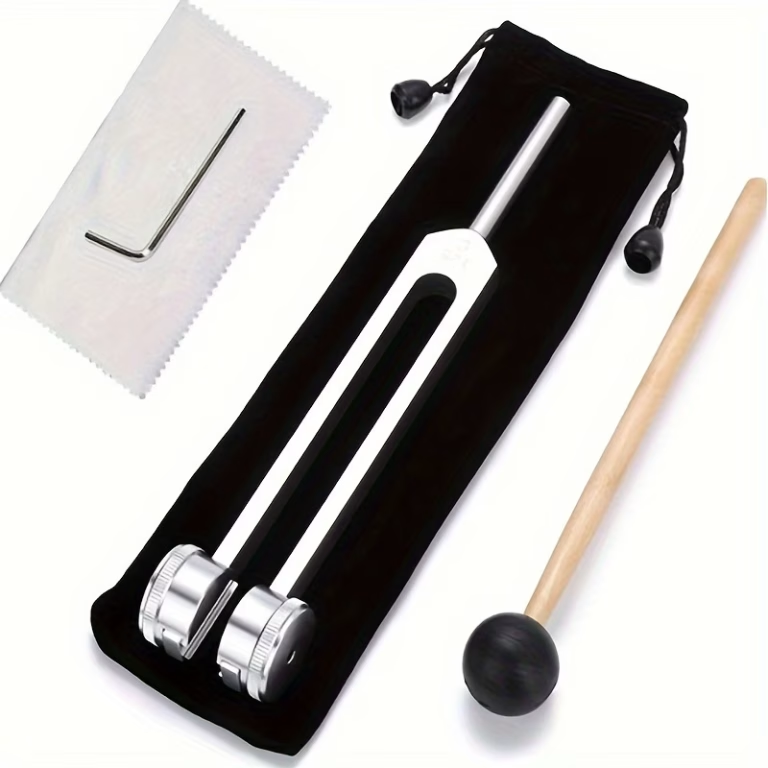
Weighted Aluminum Tuning Forks – Various Frequencies | Sound Healing, Meditation & Chakra Balancing
Discover the pure, resonant power of precision-crafted tuning forks. Each fork is made from high-grade aluminum alloy for exceptional clarity, long sustain, and perfect pitch accuracy.
Available Frequencies:
Choose from our full range including:
• 32 Hz – 64 Hz: Used in osteopathy and neurology. These deeply physical vibrations are applied directly to bones to stimulate tissue repair, nitric oxide release, and joint mobility
• 128 Hz: The most common weighted frequency. It is primarily used to relieve tension, reduce inflammation, and stimulate the vagus nerve to transition the body into “rest and repair” mode. [1, 2]
• 136.10 Hz: Known as the “Om” or Earth frequency. It resonates with the natural rhythms of the body, making it ideal for deep meditation, stress relief, and balancing the heart chakra
• 174 Hz: Often referred to as “nature’s anesthetic”. It is used to quickly soothe physical discomfort, acute aches, and provide a sense of energetic safety in the body. [1]
• 256 Hz & 512 Hz: Found in both weighted and unweighted varieties. In their weighted form, they are used to stimulate acupuncture points and clear localized energy blocks
• And many more (Custom frequencies available on request)
Perfect For:
Sound healing & meditation
Chakra balancing and energy work
Yoga, reiki, and sound therapy sessions
Music education and instrument tuning
Scientific experiments and physics demonstrations
Deep relaxation and nervous system reset
Each tuning fork is carefully tuned to within ±0.5 Hz accuracy, engraved with its exact frequency, and comes with a soft protective pouch. The smooth finish and ergonomic handle make them comfortable for both practitioners and personal use.
Why Our Tuning Forks?
Crystal-clear tone with long ring time
Lightweight yet durable aluminum
Striker included with every order
Beautifully finished and professionally tuned
Bring the healing power of pure vibration into your practice or daily ritual.